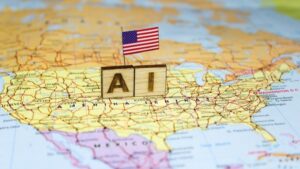
First Lady Melania Trump on Aug. 26 invited K-12 students and educators across the country to participate in the Presidential Artificial Intelligence (AI) Challenge, which is designed to boost understanding and innovation in the rapidly evolving field of AI.

New York City has taken its first official step into autonomous vehicle testing, launching a tightly regulated pilot program that will allow self-driving cars on select streets in Manhattan and Brooklyn under strict safety guidelines.
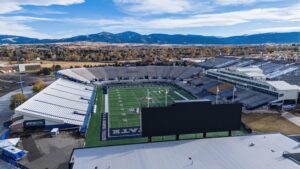
Montana State University (MSU) is opening the doors of its new quantum computing research facility at the end of this month – making the university home to one of only five quantum network test beds in the world.

The Office of the Assistant Secretary of the Air Force for Space Acquisition and Integration (SAF/SQ) has become the new sponsor for Utah State University’s Space Dynamics Laboratory (SDL) as part of the Department of Defense’s (DoD) University Affiliated Research Center (UARC) program.
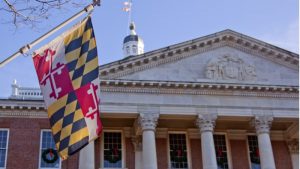
Maryland’s Department of Information Technology (DoIT) has published its new Information Technology Master Plan that charts a course for modernizing how the state operates, builds, and delivers IT services.
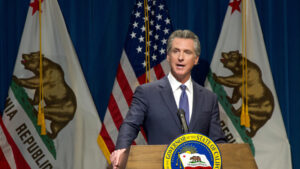
California Gov. Gavin Newsom has announced a partnership with several tech-sector giants to give students and teachers in the state’s high schools and colleges access to artificial intelligence tools and training.

The Vermont Community Broadband Board (VCBB) announced a new program on Aug. 6 designed to help residents connect to broadband service when installation costs exceed standard rates.

Mississippi State University (MSU) has reached terms on a partnership with Amazon Web Services (AWS) and Ad5 that the university said will employ artificial intelligence technologies to improve engagement with prospective students, alumni, and supporters.

The city of St. Paul, Minn., is continuing to respond to a significant cyberattack impacting access to some internal systems and online services, with the help of the Minnesota National Guard.
The U.S. Department of Education issued new guidance on July 25 to recipients of agency funding grants to harness artificial intelligence technologies to improve educational outcomes.
Archives
- June 2025 (1)
- December 2024 (1)
- November 2024 (1)
- October 2024 (1)
- September 2024 (1)
- August 2024 (1)
- July 2024 (1)
- June 2024 (1)
- May 2024 (1)
- April 2024 (1)
- March 2024 (1)
- February 2024 (1)
- January 2024 (1)
- December 2023 (1)
- November 2023 (1)
- October 2023 (1)
- September 2023 (1)
- August 2023 (1)
- July 2023 (1)
- June 2023 (1)
- May 2023 (1)
- April 2023 (1)
- March 2023 (1)
- February 2023 (1)
- January 2023 (1)
- December 2021 (1)
- October 2021 (1)
- June 2021 (1)
- May 2021 (2)
- April 2021 (2)
- March 2021 (4)
- February 2021 (1)
- February 2020 (1)
- October 2019 (2)
- September 2019 (3)
- August 2019 (1)
- July 2019 (2)
- December 2018 (1)
- February 2018 (1)
- September 2017 (3)
- November 2016 (2)
- October 2016 (3)
- September 2016 (1)
- April 2016 (1)